Browser side and server side
Browser and server side refer to two different areas that are responsible for the operation of a website. The browser side covers everything that is visible to the user or what the user operates with. This generally refers to the user interface of the website.
From the perspective of the client-server model, the browser is the client that presents the user interface of the web page to the user. When the user visits a web page, the browser makes a query to the web server, which returns the user interface to the browser.
All information on the browser side is called the browser side (eng. frontend). This includes, for example, images, text, colors, styles, buttons, icons, and practically everything the user interacts with in some way.
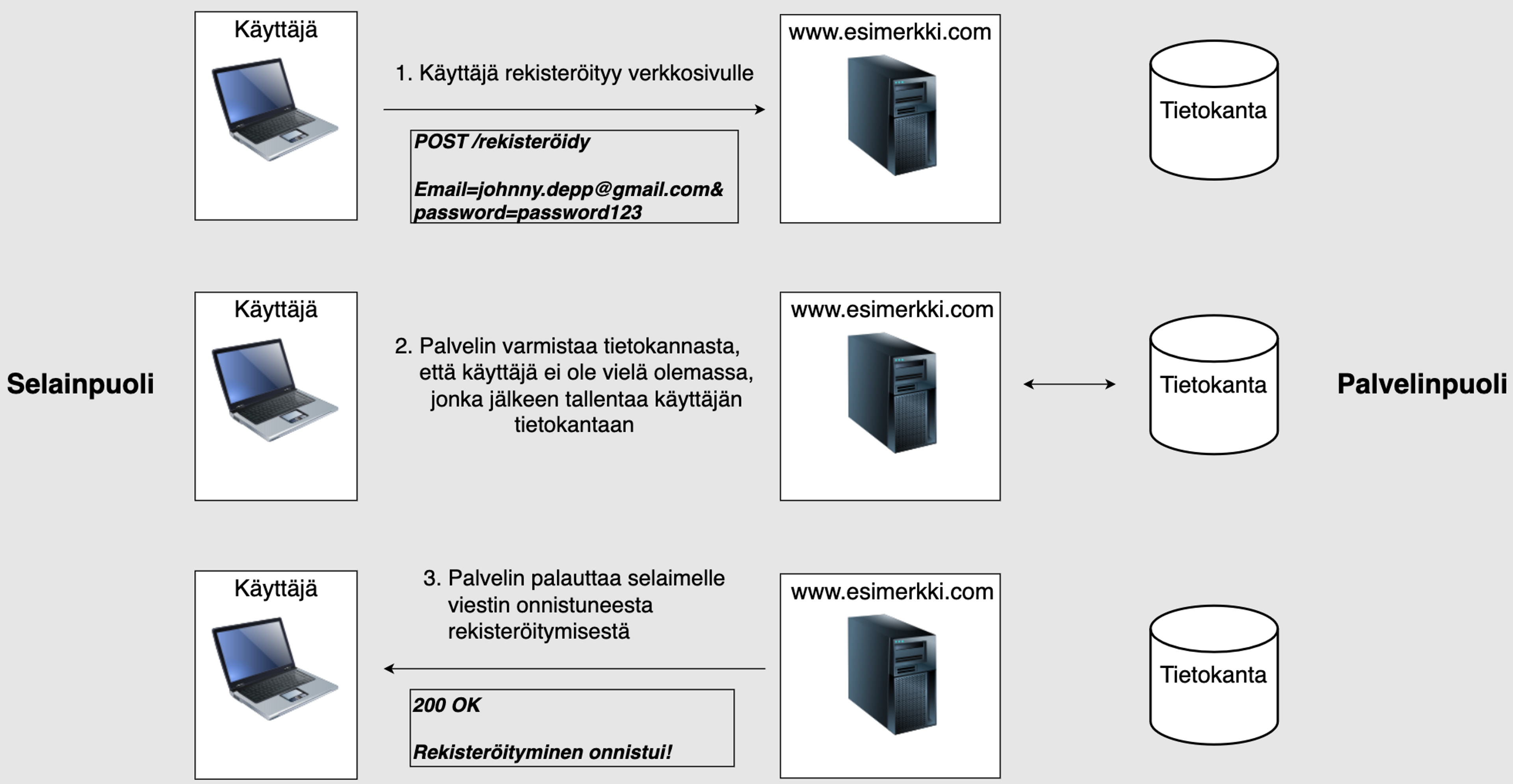
The task of the server side (also known as backend) is to provide a user interface and support the functionality of the client side. For example, when you register on a website, the user fills in their information in a registration form, and then the browser sends the data to the server, which can verify the accuracy of the provided information and ensure that the same user does not already exist. After that, the server can create a new user in the database with the given information. The actions that take place on the server side are naturally invisible to the user.
Learn to hack — start here
Hundreds of interactive courses, virtual labs and CTF challenges in your browser. Start a free trial — no card required.