UDP (User Datagram Protocol)
UDP (User Datagram Protocol) is one of the basic protocols of the Internet, which provides an unreliable but fast method of data transfer. It differs from TCP (Transmission Control Protocol) in that it does not provide reliability or error correction. DNS (a protocol that translates domain names into IP addresses, for example) typically operates using UDP, although DNS also works with TCP.
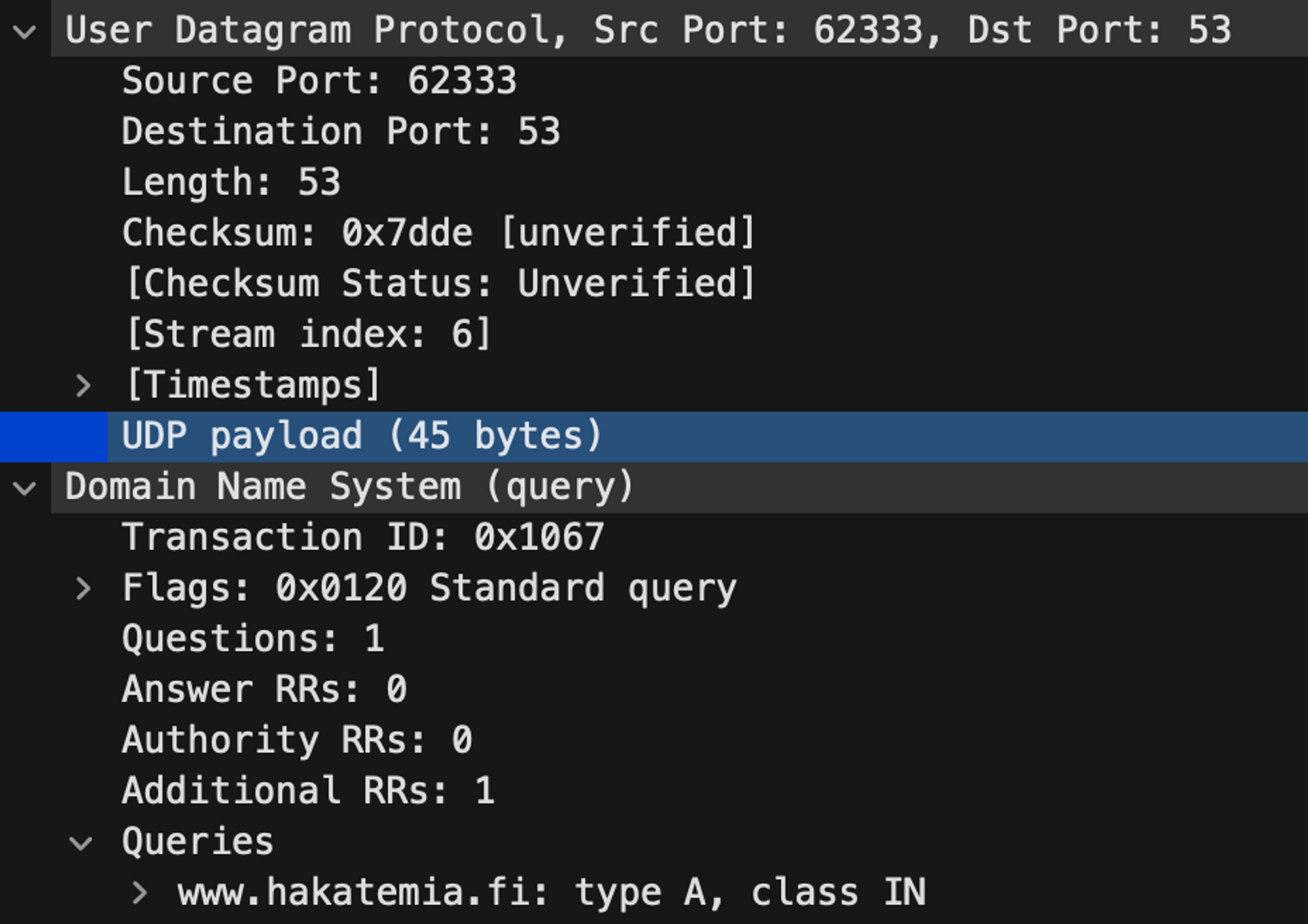
DNS example
The operation of UDP is based on datagrams, which are independent data packets. Each datagram contains the necessary information for data transfer, such as the sender's and recipient's port numbers and the data. In the case of DNS, when the user enters a domain name, the DNS application creates a UDP datagram that contains the request for retrieving the corresponding IP address. This datagram is sent to the destination DNS server using UDP. The server, in turn, creates a datagram with the DNS response and sends it back.
Learn to hack — start here
Hundreds of interactive courses, virtual labs and CTF challenges in your browser. Start a free trial — no card required.